Monday, 12 December 2011

A Guide to ... Rome

Roma! The capital of Italy, and the city with the BEST ice cream, (or gelato) I have ever tasted. Yes, the very first shop you should visit is straight to the corner shop for a tasty treat. Well, apart from the gelato there is still plenty to see and do. I stayed in Rome for four nights and five days. They were jam packed but what else is there to do whilst you are on holiday... sleep? I think not.


Of course there are the normal sights to see that every tourist must see as well as the ice cream. In my opinion the very best sight to see is the Trevi Fountain. It is without a doubt the most perfect place in the entire world. Even when it is crowded with hundreds of people it is still very serene and quiet. If you follow the path from Termini Central, I will show you what you will find along your way to The Vatican. It is a perfect tourist route that wont make the walk feel too long. I did it in 40 degree heat so I know you can.

Your first stop along my route is The Trevi Fountain, but it is a hard spot to find. We found only one sign to it down a tiny back alley. Before I went to Rome I had seen the Trevi Fountain in many films and shows and had always assumed that it was a large fountain in a large square. This assumption meant I was looking out for a large open area. Be warned the Trevi Fountain is a very magnificent fountain in a very small back alley. When looking for it, make sure you go under the road, through the huge tunnel and then turn left.

After Fontana di Trevi you will come across the Pantheon. This is a huge basilica with a dome that baffles architects today. The structure stands very tall but the walls support the huge dome above easily, which should not happen. The dome should collapse because the walls are not big enough but it is still standing. If you go inside you will notice that the design in the dome has also been copied to one of the domes in the Vatican.

After the Pantheon is Piazza Navona. It is a large piazza with three large fountains. These fountains are gorgeous and I suggest visiting early in the morning so you can see the whole piazza in all its glory. After about 11am it gets very busy, mostly people selling art. If you start my trip at about 9.30am you should reach everything along my path without too many tourists there.

Next up is The Vatican. This place is huge! Seriously, much larger than I expected. To give you an idea, there are numbers and words written across the top of the Vatican and each one is 8 feet high. This is a theme in Rome, everything is ten times bigger than you think it will be. Especially standing right up next to it. I was not sure if I would like the Vatican because I am not sure what I really believe in and I know that the Catholics have a very checkered past as well as present. I went with two friends who both had a lot of opinions on the Vatican and Catholics but when we got there it was not too overly in your face about religion. It was mostly about art, the Romans and the Popes.

Thankfully, we were approached by someone that was selling tours to groups of English tourists. It was 40 euros each for The Vatican, The Sistine Chapel and the The Vatican Art Museum. I highly recommend this as it worth every penny. Other guided tours are not, I will mention which ones later. 25,000 people a day visit the Vatican so this gives you an idea of just how busy it is. There were queues everywhere. This alarmed us slightly as we really did not want to be out in the heat for hours. This was our first bonus to having the guided tour, no queues, at all. We were first given a history of the Vatican and the Popes, I found this really interesting but we had to listen though headphones that were annoying. You get to used to them and they are must so you can hear the guide when it is busy.

Once we were on our way we started with the art museum. I expected art that I had never heard of before but there were statues, art and tapestry's everywhere that I had definitely heard of and that all had interesting stories behind. Michelangelo is the most prominent name in the Vatican. This is because he painted the Sistine Chapel ceiling and wall as well as doing many sculptures for the Pope. Apart from the Sistine Chapel the most interesting story is behind a sculpture called The Laocoon.

As soon as you enter the museum you will see a full sculpture of the Laocoon and notice the way in which the priests arm is. It is shot out, holding a disc of some kind. This is not the real sculpture. This is an imitation with the arm on. When the sculpture was originally found the arm was missing. The Pope asked Michelangelo to make a new sculpture with the arm in the correct position. Michelangelo felt he could not do the sculpture justice so asked all his assistants to draw a picture of how they thought the arm should be. There were hundreds of drawings. The drawing that averaged the most was with the arm shot out, almost saluting; so this is what was made. A few years later the rest of the arm was found. It turned out that the arm was bending backwards, behind Laocoon's head. The one and only artist to draw the correct sculpture was Michelangelo. He understood the human body, the muscles, the bones so well that he was the only one to study and draw the correct arm in the correct position.

These tours tell you as much as possible about the art on show, I do not study art and I enjoyed everything I was being told about. This may be too much for some people but you can always leave the tour at any point. As I said, I went in August and the whole of Rome was very busy, especially the Vatican. We were going round the museum about midday and it was almost intolerable. There were no windows open because of the nature and age of the art and there were easily about 600-700 people in each room. This made in unbearable at time but what kept me going was that at the end of all this was the Sistine Chapel. I have always been interested in the Chapel and the painting on the ceiling and of the Last Judgement. I have also seen many photos of it but nothing compares to the real thing. If you see only one thing in Rome, make sure it is the Sistine Chapel.

Michelangelo never classed himself as a painter, he was a sculptor. This meant that the painting was even harder for him. The next point that made it harder still was the fact that he was painting a fresco. This is when you paint with and on to plaster. It has to be wet when you are painting and if it goes dry before you finish you have to start again. The last painful point was the Michelangelo painted standing up tilting his head backwards to the ceiling. He never laid down on the scaffolding which people normally assume. His first part of the ceiling he did was Noah's Ark with PEOPLE going in to the Ark two-by-two not animals. This first panel took him one month to paint, the last panel took him one day. He took a six month break after 28 months work and finished the ceiling in four years. There were a lot of set backs and the work itself was not your typical fresco. He had to make the people he painted look 'normal' but on a vaulted curved ceiling. Not only did he paint the panels for the depicition of Genesis but he also painted prophets, shields and the pendentives to name a few.

You may think that after reading my blog you do not need to visit the museum or learn any of the art history but you really do have to see it all for yourself, in person and I have only touched on some of the history, barely even scratched the surface. This finishes your tour to the Vatican as we have reached the end. Do not re-trace your footsteps home because getting lost in Rome means you will discover something new and beautiful. There is literally something to be photographed down every street.


The Coliseum is a must see. You will be surprised constantly how close everything is to each other. It is a short walk away from our hotel and literally down a little side street. This is another place for you to expect queues. To give you an idea, the queue literally went three quarters around the outside of the coliseum; this is a large queue. We again had people approach us to give us a tour and because of the length of the queue we took them up on their offer of 30 euros. This was including student discount so if you have a student card take it with you because they do offer discounts in some places. After our amazing Vatican tour we thought that the Coliseum tour would be just as good if not better. We were severely disappointed. The ticket to get in to the Coliseum is only five euros, I advise get there early and queue. This is much better than paying more and being time constricted. The tour was for about 20 minutes in the Coliseum, we then had 20 minutes to explore before we had to meet the tour group outside. You probably do not need much more than 20 minutes to explore but I would say about 30/40 minutes would be good. As I have said the Coliseum is huge and it has such a deep and long history that you want as much time as you can have to explore it.

The tour continued across the road to The Roman Forum. This was included in the tour and we did start it but the heat was too much. Anyone that has done a module in Romans at school will all ready know pretty much everything they talk about during the tour. I would not recommend this but again there is a queue before you go in and our tour did skip the queue. It is a very pretty place but not worth the 35 euros and shortened time in the Coliseum.

Lastly, Pompeii. This day trip was 60 euros and completely worth it. You can get more expensive day trips that stop at Naples but from what I have heard about it, it is not normally worth it. We got to the coach station, which was very close to the Central Terminal for trains, and very close to our hotel, only about a ten minute walk. The coach trip is about three hours but it really felt a lot shorter. They have one stop half way though too. We had a tour guide on the bus who told us about Pompeii and meeting times etc. She did not carry on with us in Pompeii though.


Again, once in Pompeii we had, yet another queue. This one was not as long as the others but took longer time wise. We got half way through before we were offered another special trip. I think it was about 10 euros plus our entry ticket and we skipped the queue and had a tour guide for Pompeii. This is a tour I would definitely suggest. Pompeii is huge, much larger than just a couple of rocks in the ground. Our guide was really nice and although he walked fast he did make sure we were all OK and spoke to us in the shade. He also answered all of our questions and made sure people were out of the way for our pictures. Once we finished the tour we were able to look around by ourselves. There is a bookshop and a restaurant here too. Just outside are little stalls selling tourist souvenirs so these may be a cheap way of getting something from Pompeii.


If you can afford it and are in Rome for long enough I would really recommend going to Pompeii. We pre-booked so we knew we definitely had a trip and the payment was done; it did not take anything from our spending money.


I stayed in Hotel Ariston for four nights in the first week of August for £300. This was a nice, modern hotel in perfectly situated part of Rome. It was close to the trains, and had plenty of places to eat around it; cheap, middle of the road and for the more expensive taste. There were cheaper hotels but this was the cheapest four-star we could find. Definitely take a map too, they had some in our lobby which really came in handy. Have fun and remember to explore, do not stick to the main roads, you will find something beautiful.

Sunday, 11 December 2011

A Guide To... Putting an image on to the Vision Mixer

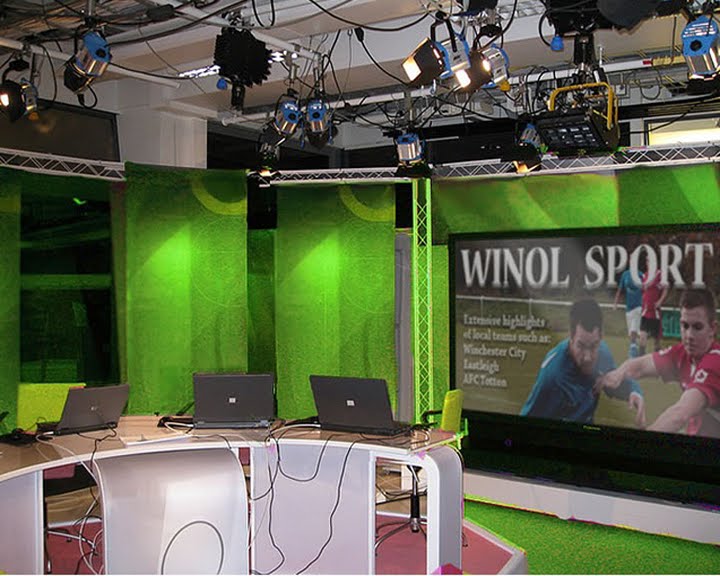
As I said in my last blog, we had a problem with all of our green screens being deleted in some way. In this blog I will tell you how to put an image on to the SD card for the Vision Mixer and I also have the pctures of our backgrounds on here so you can take them from here whenever you need to. Lastly, we now have no backrground for WINOL Life so a new one will have to be made if you carry on with it next year. You may want to make a new background for everything so that they all link. These are not perfect, especially the WINOL bulletin background as that is only a captured image but it was OK for our last bulletin as we had no time to make anything else.

"So, my only idea for making sure that we had a background for the following day would be to look though all our tapes of WINOL to find a spot where there was no-one being filmed and just an empty room with our background. It took five tapes but I finally found a tiny spot, about three seconds long that had no-one and nothing in. I captured this, grabbed it, then saved it to the desktop.


To get the picture on to the SD card you have to open it in photoshop. You then have to change the image size to 720x576 pixels. You then need to save this as 24 bit.bit map or 24 BMP. Put in the SD card and move the background in to the file marked, 'images' and you're done. When it is put into the vision mixer it should download properly. My next blog will have the Sportsweek and WINOL backgrounds in for any future use, best to back everything up."


Hope that is OK. Here are the pictures of the backgrounds for WINOL and Sportsweek but please keep in mind you may not be able to drag them straight on to the SD card, you may have to go through the above process. Also there is no photoshop on the computers in Tab9 but there are in the MMC if you can nab a computer.


WINOL - 7 December


Au revoir my beloved WINOL. My very last show and it was much more emotional than I first thought. For the last 11 weeks I have been counting down the shows as things have gone wrong every week and I was not enjoying WINOL as much as I used to. I expected to just feel relief when I finished and we packed up the studio but it does feel a bit like the end to an era. I have been on production for WINOL for the last three semesters and I have learnt so much. I know every part of the gallery and the studio and I really do hope that this will not be the last time I am in a studio.

The show went well, Dan directed, I was on the sound board, George vision mixed and Justina was on autocue. I think it is quite ironic that I was on the sound board and enjoying it when only three weeks ago I dreaded it. The show went so smoothly, everyone was relaxed, happy and calm. The packages were great, and the presenters did really well too. It felt bittersweet because we were all tired and just waiting for the end but on the other hand I felt quite sad that it was all finished. My three semesters have flown buy, it feels like only yesterday that I was working with third years before me on their last WINOL. The only advice I can give to anyone working on WINOL is; enjoy every minute. From the complete lows to the ecstatic highs, enjoy everything because it will all be gone in the blink of an eye.


The only problem we had this week was that our green screen was no longer on the SD card and ALL of our work had been deleted from the computer in the studio. When I say ALL I mean absolutely everything, even the routes and backgrounds to the files were deleted. Suspiciously Media still had all of their work on the computer though, and in fact had more work; plastering the entire desktop. I worked on getting back the green screens whilst Jack focused on putting the beginning sequence together.


Luckily on the Tuesday I found all of our music for the opening sequence in ten second parts which helped Jack as he then only had to find the video of the opening sequence and put the two together. I remembered that Chris had saved the Sportsweek background on Flickr so after trolling it for a while I found the background. The WINOL news bulletin background was completely lost though. I realise that this is partly our fault as we should have backed everything up but I do not think it entered any of our minds for a moment that we may loose all of our work.


So, my only idea for making sure that we had a background for the following day would be to look though all our tapes of WINOL to find a spot where there was no-one being filmed and just an empty room with our background. It took five tapes but I finally found a tiny spot, about three seconds long that had no-one and nothing in. I captured this, grabbed it, then saved it to the desktop.


To get the picture on to the SD card you have to open it in photoshop. You then have to change the image size to 720x576 pixels. You then need to save this as 24 bit.bit map or 24 BMP. Put in the SD card and move the background in to the file marked, 'images' and you're done. When it is put into the vision mixer it should download properly. My next blog will have the Sportsweek and WINOL backgrounds in for any future use, best to back everything up.


That was my feat for this week. Getting our green screens back and having them working in time for our bulletin at three.


Please find above my very last WINOL Bulletin show. Enjoy.


I wish good luck to everyone that is carrying on with WINOL or just starting. I hope I have guides that are relevant for you on my blog. Such as my OB Kit and Tricaster post and my next one with the green screens in. Best of Luck.

Monday, 5 December 2011

WINOL Strike Special


This week has been a lot of hard work preparing for the strikes. I am happy to say that it was all worth it and we all pulled together an amazing four hour show. I had my reservations about not doing in the studio and going to the Unite the union offices. My gut feeling was that we have a studio that we all know how to work and will only have a very few technical problems; if we do there is always Dave or Corin there to help us. I also thought that the day was going to be hard enough without moving it to another location and taking all the equipment there.

The reasons for which it was moved were: it was easier access for guests, no picket lines to cross, it was a better backdrop for the audience than just a green screen and we were in the heart of the action being in the middle of Southampton.

After visiting and starting to set up on the Tuesday I soon started to feel excited about what we were going to attempt to do. The offices looked great, and had a real old air about them. We had the desk in front of the window where you could see The Avenue behind and the room was plenty big enough for everyone to fit in and work. Rehearsals did not start off as we had liked but within an hour we had been rehearsing and nothing had gone wrong. The hour literally flew by. My role was to work as the director for packages and adverts, worked on the vision mixer, sound and VT's but this was extremely hard with the Tricaster because you could only do everything via a mouse and a keyboard. Jack fixed the vision mixing problem by finding the correct wire for the vision mixing desk and plugging that in but it was still too much work for one person so on the day Katie Rowles and I worked together.

After the rehearsals I felt much better about the strikes on the Wednesday. We still had a few problems to work out but it did start to look like we were going to be able to pull it off.

We started more rehearsals at 10.30 on the 30th. They started out all right but the Internet connections in the room were not as good as they could have been and a problem that we should have fixed the day before. We had guests arrive at about 11am so we were not rehearsing for long before we had to start being professional and working as if it was a live broadcast.

Once the interview had finished we were left with about 10 minutes to prepare ourselves before going live. The interview was no scheduled and I think it left a lot of people worrying and panicking about not having a proper rehearsal and time to breathe. This may have been one of the reasons that in the first hour we were broadcasting on ustream with very little to no sound. The ustream was also behind out filming by about four minutes. The problems with the microphones meant that we had to shut everything off and practically start again. This was not a good start but once this problem was fixed we did not have any others that day.

Working on the vision mixer. the only problem was the lack of cameras and the fact the once we started broadcasting we could not shut the program off. This meant that when we got more packages in on the memory sticks, we had to keep the sticks until we had aired the package otherwise it would go offline. We also only had three memory sticks that were programmed with the Tricaster so we had to alternate with these.

Katie and I also found a way of writing straps and putting them on the live cameras as we were rolling. This was a large feat for us because this enabled us to put names up as well as naming the different areas of the studio. For example when the guests came on we had the strap, "WINOL Live Debate", this made it look even more professional.

The reporters did an amazing job with all of their packages and if we did not have as many as we did all ready save and in the bank we would have had a lot less content and the beginning few hours of the show would have been really boring and hard to get through. Towards the end of our broadcast we started to get some really great content of the strikes, however, the strikes had also started to calm down and in some places they had gone home.

Our Skypes did not work as well as we had planned, or as we had rehearsed. We had one from London Metropolitan, which had to be cancelled half way through and a couple from Liverpool which worked really well but that was it.

Louis O'Brien did really well with getting in the guests that he did. We had Seb Miell, a student, some union members and some councillors. It was really well rounded and we got some great answers from them about the strikes. Jake Gable was great at interviewing them as was Hana Keegan and Cara Laithwaite at presenting. They had all really got a firm knowledge in a lot of the points of the strikes. This was a necessity but they managed to pull it off really well and left myself and the viewer understanding what was going on during the day.

As we streamed to ustream we do not currently have the full show for upload. You can watch above the OB's though, so enjoy.

Sunday, 27 November 2011

Law Revision

In this blog I will give the key themes in all of our sessions so far. This should be helpful for revision on our law test for the 1st December.

Court Reporting

The main difference between them is whether they are criminal or civil. The diagram to the left is the hierarchy of the courts and how they correspond to each other.

Criminal courts deal with cases of murder, theft, fraud etc and this where the cases are bought to be heard in front of the state, the DPP. (Director of Public Prosecutions) Since 2008 Keir Stammer QC has been the DPP of England and Wales.

Civil law covers divorces and consumer, agricultural and employment laws, etc. The Court of Appeal where criminal and civil law converge.

The courts are different between England and Wales (being one system) and Scotland. Scotland have a lot of different laws. They are able to vote on most of our laws but England and Wales have no say on any of their laws which makes it very one sided and also does not help England and Wales vey much. The only court that covers England, Wales, Scotland and Ireland is the Supreme Court which is at the very top of the chain.

Prejudice and Contempt of Court

Being prejudice means, writing an article that may not be in the defendants favour and giving the readers an opinion. They have to have a fair trial and and being prejudice in an article is when anything mentioned contaminates the trial or the defendant.

Contempt of court is what happens when you actually are prejudice in your article. Contempt of court can allow a person to go free from the crime they may have committed as they will not be given a free trial. The person who wrote and published the article could then face jail themselves.

When a case becomes ACTIVE legally, is as soon as an arrest has been made. As soon as this happens you can be in contempt of court. You can also be in contempt of court if any of the following have been done. When the police make an arrest, when an arrest warrant has been issued, a summons has been issued by a magistrate and of course, when the person has been charged with the crime.

Before the trial begins you may report on any of the following seven points.
* Names, ages, addresses and occupation of the defendant,
* Charges faced or a close summary,
* Name of the court and Magistrates names,
* Names of the solicitors or barristers present,
* Any arrangement of bail,
* Date and place to where the case is adjourned, and,
* Whether any legal aid was operated.

However, if the trial has anything to do with anyone under the age of 18 they are given anonimity. This means that by no reason are they to be found out. They have to have complete anonimity and this may then mean that there are some points that you can not report on. Anonimity is only ever taken away if they voluntarily talk to the press themselves and most of the time accompany it with a picture.

The key stages of the trial are:
* The prosecution opening,
* Key prosecution witnesses,
* Defence opening,
* Key defence witnesses,
* Judges summing up,
* Jury sent out, deliberation and the verdict,
* The sentencing.
If you attend the prosecution opening you must then attend the defence opening. Whether you decide to report on it or not, you must attend both.

A Magistrate is a civil officer who lays out the law. They administer sentences and only deal with criminal law. Civil cases will not make it up this far in the chain of the courts.

The categories of offence are, indictable only, which is a possible sentence of five years plus. Either-way can go to Crown or Magistrates court. Summary, stays with the Magistrates court. The powers of the Magistrates are 6 months jail, fines up to £5000, suspended sentences, conditional charge, community orders or ASBO's.

A community order is where the defendant is forced to serve their punishment in the community. They are not sent to prison but if they do not meet their conditions they may then go to jail and be punished there.

A conditional discharge is when the defendant is not punished but they have to comply with some conditions. If these conditions are met the discharge will become absolute where the defendant can walk free. Even if they have been proven guilty they may not be punished if they meet their conditions.

A suspended sentence is when the defendant would have been given their sentencing but when the Magistrate suspends it they are on probation. On this probationary period if they do not break the law the Magistrate will throw out the sentence.

Libel and Defamation

You can commit libel if you do any of the following:
1. Defamation
2. Identification
3. Publication Defamation is when you write an article that defames someone or a company.

Defaming someone means you have damaged their reputation. To be accused of defaming someone it has to be proven. You can also be accused of defamation through slander.

Identification, this is when a particular person is named. This can be an accidental problem through jigsaw identification. This is when you tell the story with all the facts but you explain enough that the reader can understand who it is. Jigsaw identification can be done accidentally so when writing a script telling facts about the defendant you have to be careful you don't explain too much.

Publication is when the article/programme is viewed by more than one person. When published on the Internet each load of the page is another publication.For each of these ways of defamation there are ways in which to defend yourself against it. You only need one of these defences but the more you have the more covered you are.

Justification is when what you have said is true and you can prove it. You need to be able to prove this though. This is one reason you should always keep all your rushes and notes. Especially if your notes are in short hand. This makes your evidence more believable.

Comment is your second defence against defamation. This is when it is the writers opinion. This has to be shown as definite opinion however. Many newspapers have a header at the top of the page saying comment or opinion. Sometimes guest editors also fall in to this category, especially in magazines where they get many celebrities to write a page of opinion on other celebrities, styles, fashion etc. Qualified privilege is when what you have written has been said in court. If you are going to report something defamatory and plan on using qualified privilege as your defence you must report fast, accurately and fair. The offended person does not have to show that they have been harmed but do have to show that they have suffered.

Common Law Qualified Privilege is a form of the above but it does not have to be said in court. This can be used is the following conditions have been met. The public need to hear about it, this is something that you do not need to prove. It has to be without any malice at all. The article itself and EVERYTHING you have ever written before. You should never write with malice anyway but if you have any article with malice in, you can not use common law qualified privilege. Again, everything must be fast, accurate and fair; and, for good measure there must be reasonable suspicion.

Malice and Qualified Privilege

Malice can expressed or implied. Either way is bad for journalism. No article you write should ever have malice in it. Unless you write comment pieces you should never have your own opinion in your articles anyway. When implying malice you are again, putting your own opinion in the piece which should not be done. To have common law qualified privilege you must show no malice and have no malice in any piece you have ever written/produced.

The Reynolds Defence

This is a list put together by Lord Nicholls that journalists must adhere to if they want to use the defence when publishing defamatory material. Bearing in mind that the piece in question is of public interest and is responsible journalism.

This defence came about when the Sunday Times was sued by Albert Reynolds; the former head of the Irish government. He sued because he believed that the story had deliberately and dishonestly misled the country's parliament.

In the defence of the Sunday Times they said that they were keeping within article 10 of the European Convention on Human Rights and that in public interest in political issues and the conduct of elected politicians should be protected by qualified privilege.

The Sunday Times lost but the following defence was put together to allow future publications to publish defamatory articles in the name of public interest.

1. The allegation must be true and the seriousness of the allegation.
2. The extent to which the information is a matter of public concern.
3. The source of the information. No one with previous anger against the accused or are being paid for the story.
4. All the steps that you've taken to verify the information. This must be recorded information.
5. The status of the information. If it is all ready subject to an investigation this must be respected.
6. The urgency of the matter. Can not be old news.
7. Approach the claimant for comment.
8. Whether the article contained the gist of the claimants side of the story.
9. The tone of the article. The newspaper can raise queries and investigations.
10. The circumstances of the publication, including timing.

This has been criticised as being too narrow by judges in the House of Lords.

Copyright

Copyright covers everything from music to film, from the performers to pictures and everything in-between. Copyright covers the object or person as soon as it is published. Showing a film you have made to a friend is not subject to copyright but once you have published it to the internet or put it on to a DVD for viewing this is then copyrighted. A DVD is subject to copyright for 50 years after it has been published and a book is out of copyright 70 years after the author dies.

Fair Dealing

This is when you are allowed to use a small amount of footage from a film, music video, game etc for free. As long as you credit the company and the person you are allowed to use this. Just make sure it is only a few seconds and no longer. A great example of fair dealing is in Ewan and Grahams game piece where they are reviewing games and have a small amount of footage from the games in the review.

Confidentiality and Privacy

Privacy is linked to Articles eight and ten of the Human Rights Convention. Article eight is that everyone has the right to a private lifer and Article ten is freedom of speech.Confidentiality is linked to the Official Secrets Act 1989. It is a criminal offence to disclose official information without lawful persmission.The PCC's definition of Public Interest includes, but is not confined to the following:* Detecting or exposing crime of serious impropriety.

* Protecting public health and safety.
* Preventing the public from being misled by an action or statement of an individual or organisation. This is the defence we will rely on most.With confidentiality you are allowed to keep secrets as long as they are not against the publics interest. A doctor, employee, lawyer etc can commit a breach of confidence if they discuss a secret with a third person. This is third party breach of confidence, when you are told a secret that was between two people. It is fine to publish this secret but you have to talk to the person the secret is about and inform them of the fact that you are going to publish it. If you do not inform them before it is published they will be able to sue you. A secret is only confidential when all the following points have been ticked. If any one of them are missing it is not confidential.
* The quality of the confidence, this can not be a rumour.
* If the secret was provided in circumstances imposing obligation. For example, a normal reasonable person would think it would be kept secret.
* No permission to pass on the information given.
* Detriment is likely to be caused to the person who gave the information.

Privacy

Article 8 states: 'Everyone has the right to respect for his private and family life, his home and his correspondence.'Privacy mainly affects magazines and tabloids as they are more based on celebrity and their private lives.You must have consent when filming someone or taking their picture.

There are two types of consent.
* Explicit consent - The person has signed a contract. Or a release document. This will be useful if you think that the person may sue you at a later date; as you will have written proof of their consent.
* Implicit consent - They are looking in to the camera so they know that they are being filmed. You can also ask them to consent on the camera too as this would be good evidence of their consent if you were to be sued.

The case for privacy is Princess Caroline of Monaco. She campaigned for injunctions to stop the paparazzi from continuously filming her in every day life.After initially failing in court she then won on her second appeal for privacy. The ECHR ruling was that there is no legitimate public interest in knowing the whereabouts and behaviour of individuals generally, despite their fame or being in public. A legitimate expectation of protection of ones private life is to be extended to the criteria for assessment. A fair balance is to be struck between the right to privacy and the freedom of the press.

FOI Requests

Anybody is able to make an FOI request to any public authority. Only the UK security and intelligence agencies are exempt from having to give information through an FOI request. Every other company has to give you information. When filling out a request you have to be very specific otherwise they can refuse and will ask you to narrow your search. This could go on for months. The authority has 20 days to get the information to you or has to send you a reason as to why they can not get it to you within the 20 days. Your search not being specific enough would qualify as to why they can not send it to you within the 20 days; maybe there is too much. An FOI request is also free unless getting the information costs more than £600. Or if it is more than £450 for local councils.

Wednesday, 23 November 2011

WINOL Life - 22 November


This week went really well. We had Lorelei Reddin in. She is the Entertainment Editor at the Daily Echo. Lorelei was really friendly and gave not only great criticisms but really good information about what her job is really like. I was also impressed that with six years under her belt as the editor of entertainment she still really loved her job.

I directed again this week and I am actually really starting to enjoy it. The job is very stressful when you are using multiple cameras and everything has to be done in one shot but I pulled it off again.

In this show we had a restaurant review of Giraffe, WINOL Games review and an interview with Coldplays marketing manager. Our features are getting stronger. We still have some problems with them not being 100 percent perfect on the technical side of things but we can only get better and the second years are still learning.

We are starting to get in to a great rhythm with WINOL Life and everyone is getting used to it. We were meant to have Maria Milano as our guest in our next show so we have geared all of our features towards fashion. However Maria Milano is not able to make it so we are now on the look out.

I hope you enjoy this WINOL Life, I feel it is one of the best yet and I am sure the next will only get better.

Law - 17 November

Freedom of Inofrmation requests and Invesitgative journalism was on our agenda this week. Julie Cordier recently had a very fruitful FOI request. We had an exclusive on WINOL. This was about the fact that some officers on the police force have criminal records. She was able to find this out from an FOI request she sent asking a very direct question.


Anybody is able to make an FOI request to any public authority. Only the UK security and intelligence agencies are exempt from having to give information through an FOI request. Every other company has to give you information. When filling out a request you have to be very specific otherwise they can refuse and will ask you to narrow your search. This could go on for months. The authority has 20 days to get the information to you or has to send you a reason as to why they can not get it to you within the 20 days. Your search not being specific enough would qualify as to why they can not send it to you within the 20 days; maybe there is too much. An FOI request is also free unless getting the information costs more than £600. Or if it is more than £450 for local councils.

The following website give guidelines on this act as well as amendments when they happen. With law amendments can be made and rules changed so as journalists we need to keep up to date with the new or changed rules regarding FOI requests and other media acts and laws. http://www.legislation.gov.uk/ukpga/2000/36/introduction

Photo By: Auntie P